



MT2
The melatonin MT2 receptor (MT2) is a high-affinity G protein-coupled receptor that mediates melatonin’s effects on circadian rhythm regulation and sleep architecture[1][2]. Mechanistically, MT2 activation modulates intracellular cAMP, Ca2+ signaling, and downstream kinases including CaMKII and ERK, thereby influencing neuronal excitability and synaptic plasticity[3][4][5]. Compared with MT1 receptors, MT2 exhibits distinct localization in the reticular thalamus and hippocampus, favoring non-REM sleep modulation and anxiolytic-like effects[2][6][7]. In neuropathic pain models, MT2 agonists such as IIK-7 and UCM924 reduce mechanical allodynia, suppress spinal microglial activation, and engage descending brainstem antinociceptive circuits via opioid-dependent mechanisms[8][9][10][11]. MT2 also contributes to neuroprotection, as activation prevents Aβ-induced dendritic impairments and attenuates oxidative stress in hippocampal neurons, partially via the cAMP-C/EBPα/miR-125b and ERK/Nrf2 pathways[12][5]. Selective MT2 ligands display isoform-specific pharmacology, acting as full or partial agonists, enabling targeted experimental modulation without affecting MT1-mediated REM sleep pathways[13][2]. These properties support MT2 as a distinct therapeutic target in sleep, neurodegenerative disorders, pain, and oxidative stress-related conditions, with well-characterized signaling profiles for research applications[1][3][11].
References:
- [1]. Oishi A, et al. Orphan GPR61, GPR62 and GPR135 receptors and the melatonin MT2 receptor reciprocally modulate their signaling functions. Sci Rep. 2017 Aug 21;7(1):8990. [Content Brief]
- [2]. Kuthati Y, et al. Melatonin MT2 receptor agonist IIK-7 produces antinociception by modulation of ROS and suppression of spinal microglial activation in neuropathic pain rats. J Pain Res. 2019 Aug 8;12:2473-2485. [Content Brief]
- [3]. Tang H, et al. Activation of MT2 receptor ameliorates dendritic abnormalities in Alzheimer's disease via C/EBPα/miR-125b pathway. Aging Cell. 2019 Apr;18(2):e12902. [Content Brief]
- [4]. Boutin JA, et al. New MT₂ Melatonin Receptor-Selective Ligands: Agonists and Partial Agonists. Int J Mol Sci. 2017 Jun 23;18(7):1347. [Content Brief]
- [5]. Liu J, et al. MT1 and MT2 Melatonin Receptors: A Therapeutic Perspective. Annu Rev Pharmacol Toxicol. 2016;56:361-83. [Content Brief]
- [6]. Gobbi G, et al. Differential Function of Melatonin MT1 and MT2 Receptors in REM and NREM Sleep. Front Endocrinol (Lausanne). 2019 Mar 1;10:87. [Content Brief]
- [7]. Posa L, et al. Supraspinal melatonin MT2 receptor agonism alleviates pain via a neural circuit that recruits mu opioid receptors. J Pineal Res. 2022 Nov;73(4):e12825. [Content Brief]
- [8]. Wu J, et al. Melatonin attenuates anoxia/reoxygenation injury by inhibiting excessive mitophagy through the MT2/SIRT3/FoxO3a signaling pathway in H9c2 cells. Drug Des Devel Ther. 2020;14:2047-2060.
- [9]. Lopez-Canul M, et al. Selective melatonin MT2 receptor ligands relieve neuropathic pain through modulation of brainstem descending antinociceptive pathways. Pain. 2015 Feb;156(2):305-317. [Content Brief]
- [10]. Comai S, et al. Dysfunction of serotonergic activity and emotional responses across the light-dark cycle in mice lacking melatonin MT2 receptors. J Pineal Res. 2020 Aug;69(1):e12653. [Content Brief]
- [11]. Wang J, et al. Melatonin Induces Analgesic Effects through MT2 Receptor-Mediated Neuroimmune Modulation in the Mice Anterior Cingulate Cortex. Research (Wash D C). 2024 Oct 8;7:0493. [Content Brief]
- [12]. Shin EJ, et al. Melatonin attenuates memory impairment induced by Klotho gene deficiency via interactive signaling between MT2 receptor, ERK, and Nrf2-related antioxidant potential. Int J Neuropsychopharmacol. 2014 Dec 30;18(6):pyu105. [Content Brief]
- [13]. Noseda AC, et al. REM sleep deprivation promotes a dopaminergic influence in the striatal MT2 anxiolytic-like effects. Sleep Sci. 2016 Jan-Mar;9(1):47-54. [Content Brief]
All Product Categories
-
MT2 Related Products (22)
Related Products (22)

- 1
- 2
-
6-Chloromelatonin
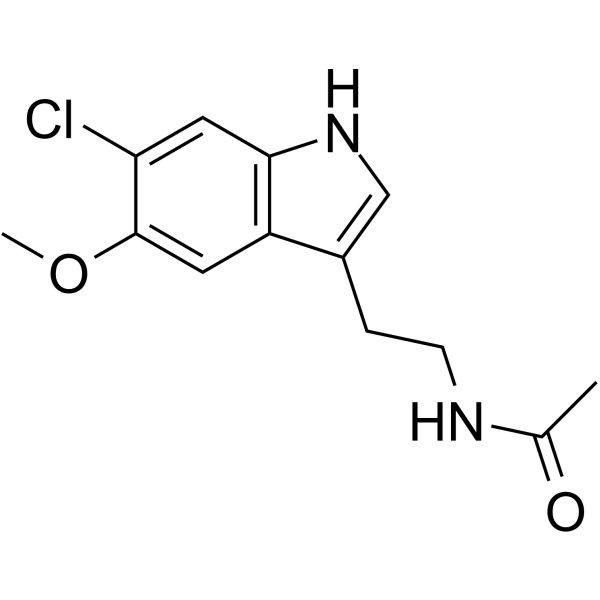 0 Images6-Chloromelatonin is a potent melatonin receptor agonist with greater metabolic stability than melatonin. 6-Chloromelatonin compete for [3H]-melatonin and 2-[125I]-iodomelatonin binding to MT1 receptors (pKi=8.9 and 9.1, respectively). 6-Chloromelatonin compete for [3H]-melatonin binding to MT2 receptors (pKi=9.77).
-
Tasimelteon-d5
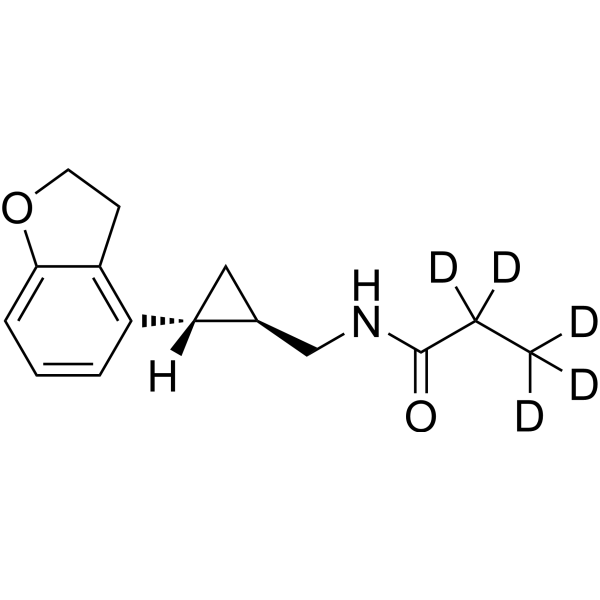 0 ImagesCat. No.: HY-14803SCAS No.: 1962124-51-1Synonyms: BMS-214778-d5; VEC-162-d5Tasimelteon-d5 is the deuterium labeled Tasimelteon. Tasimelteon (BMS-214778) is an orally active and selective dual melatonin receptor agonist (DMRA). Tasimelteon has 2.1-4.4 times greater affinity for the MT2 receptor than for the MT1 receptor. Tasimelteon is a circadian regulator and has the potential for Non-24-Hour Sleep-Wake Disorder (Non-24).
- 1
- 2



